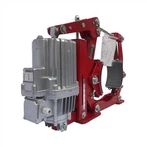
Fundamentally enhance braking stability
Innovative breakthroughs in friction interfaces
- Application of high-performance composite materials: The new formula friction plate has reduced the dynamic and static friction coefficient difference from the traditional 0.1 to within 0.04, thereby significantly weakening the "stick-slip" jitter phenomenon.
- Double the heat dissipation efficiency: The brake disc with integrated heat dissipation fins and air duct design reduces the average surface working temperature by 60-80°C, avoiding the fluctuation of braking force caused by the high-temperature degradation of materials.
A fine design for uniform pressure transmission
- Evolution of pressure equalization structure: The floating caliper and multi-piston design have increased the force uniformity of the brake pads to over 90%.
- Hydraulic compensation system configuration: Automatically adjust the gap difference caused by uneven wear to ensure that the contact surface always adheres stably.
Structural reinforcement for torsional rigidity
- The rigidity of the installation base and bracket was optimized. The actual measurement shows that the overall anti-deformation capacity has been increased by 40%, effectively suppressing the offset and vibration caused by the deformation of components.
Scientific operation and maintenance
Even the most precise equipment cannot do without standardized operation and meticulous maintenance
The installation accuracy determines the upper limit of braking
- The coaxiality error of the main shaft should be strictly controlled within 0.1mm
- The contact area of the friction pair must be guaranteed to be ≥85%, and it should be adjusted through impression inspection
A reliability-centered maintenance strategy
- Determine the replacement cycle of the friction plates/discs based on the actual load strength (for medium loads, it is recommended to conduct a deep inspection every 12 to 18 months).
- Check the cleanliness of the hydraulic system oil and the integrity of the components every quarter
- Conduct monthly braking response time tests and record comparisons
Active regulation of the operating environment
- Install protective covers and active heat dissipation devices in high-temperature workshops
- For dust working conditions, multi-stage seals (such as labyrinth + air seal combination) are configured.
- Use dehumidifying grease in environments with humidity greater than 80% and increase insulation testing
The improvement of the stability of industrial brakes is a systematic project - it requires material innovation to provide a fundamental guarantee and scientific operation and maintenance to extend the reliable service life. Behind every braking safety lies a symphony of technological evolution and rigorous management.
Safety advice: Timely updating old brakes, selecting new models that strongly match the working conditions, and establishing a comprehensive monitoring and maintenance system are effective ways to enhance system stability at present.