First identify the organization, then determine the security level.
Brake requirements vary significantly depending on the mechanism:
Hoisting mechanism: Directly related to the risk of a suspended load falling; it requires the highest safety level and must utilize a normally-closed mechanical brake that engages automatically upon power loss.
Travel mechanism (bridge/trolley): Focuses on deceleration and precise stopping.
Luffing (jib-angle adjustment) mechanism: Must balance load retention with smooth braking performance.
Note: When handling molten metal, flammable/explosive materials, or hazardous goods, each drive unit must be equipped with at least two independent braking systems, with a safety factor of no less than 1.25 for each individual brake.
Three main types-choose according to your needs
|
Type |
Core features |
Typical Scenarios |
|---|---|---|
|
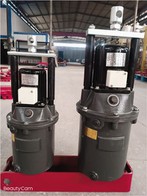
Electro-hydraulic drum brake |
Simple structure, easy maintenance, moderate cost, smooth braking. |
Hoisting and traveling mechanisms for A1–A5 class general-purpose bridge/gantry cranes, used in standard workshops for small-to-medium tonnage loads |
|
Hydraulic disc brake |
Excellent heat dissipation, minimal thermal fade, fast response, automatic wear compensation, and high braking torque. |
Heavy-duty applications (A6 and above), including metallurgical, port, and high-frequency braking scenarios |
|
Electromagnetic Disc Brake |
Compact structure, fast response, high control precision, maintenance-free (automatic clearance adjustment) | European-style electric hoists, featuring a high degree of automation, suitable for applications involving frequent starting and stopping. |
Key Selection Parameters
Braking Torque: The rated braking torque must be greater than or equal to the actual load torque multiplied by a safety factor. For hoisting mechanisms, the safety factor should generally be at least 1.5, while for critical mechanisms, it should be no less than 1.75.
Duty Class: Classified as A1–A8 according to the GB/T 3811 standard; higher classes demand greater resistance to heat and wear.
Operating Environment: Select components with high-heat resistance for metallurgical applications, corrosion-resistant versions for humid port environments, and explosion-proof models for hazardous (explosive) atmospheres.
Braking Frequency: In applications involving frequent braking, prioritize the assessment of heat dissipation capacity and favor disc-type braking systems.

Professional Advice
Ordinary driving in conventional workshops: electric hydraulic drum brakes are the most cost-effective;
Heavy load, large tonnage, high frequency (such as more than 50 tons): priority is given to hydraulic disc brakes;
High-risk working conditions (casting crane, ladle): adopt "working brake + safety brake" multiple redundancy, and install a safety brake at the low-speed end;
Routine maintenance: The brake pad must be replaced before it wears to 1/3 of its original thickness. Check the brake clearance every month.

Unsure about which model to choose? Let us help. As a professional manufacturer of industrial brakes, we offer a comprehensive range of products-including electro-hydraulic drum brakes, hydraulic/electromagnetic disc brakes, and safety brakes-with full support for custom, non-standard specifications and technical selection guidance. Please call us at +86 15516609555 or email sales@jingucranebrake.com; our engineers will provide a tailored braking solution for you, free of charge.