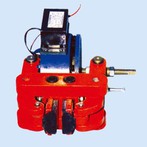
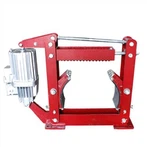
First of all, a comprehensive safety inspection should be carried out before adjustment. This includes a careful inspection of the overall structure of the crane, the brakes, the drive unit and other key components. The brake can only be adjusted when it is confirmed that all components are intact and meet safety requirements.
Secondly, when adjusting the brake, a certain sequence should be followed. Generally speaking, the braking clearance should be adjusted first to ensure that the clearance between the brake and the friction disc is moderate when the brake is closed. Excessive clearance may result in insufficient braking torque, while too little clearance may cause the brake to be inflexible. Next, the braking torque should be adjusted. This is the torque generated by the brake during the braking process and must be adjusted in accordance with the specified standards. Finally, adjust the working stroke of the drive unit to ensure that it can be used normally under the working environment temperature.

During the adjustment process, the following points also need to be particularly noted:
The working stroke adjustment of the brake drive device should be carried out under the working environment temperature to avoid errors caused by temperature changes. At the same time, it is necessary to regularly observe the changes in the working stroke, especially in brakes without an automatic compensation mechanism for brake lining wear. Under no circumstances should the working stroke of the drive device be equal to its maximum stroke; otherwise, it may cause the brake to lose braking force.
2. For brakes equipped with an automatic compensation mechanism for brake liner wear, the compensation mechanism should be adjusted and reliably fixed. This can prevent the problem of insufficient braking torque caused by the failure to adjust the working stroke of the drive device in time after the brake lining wears out.
When adjusting the brake, appropriate tools and equipment should be used to avoid damage or misoperation caused by using unsuitable tools. At the same time, it is necessary to follow the norms and safety requirements in the product user manual to ensure the correctness and safety of the adjustment process.
After the adjustments are completed, a comprehensive inspection and test should be conducted. This includes checking the braking performance, release performance of the brakes, as well as the working stroke of the drive device to ensure that all adjustments are correct. Additionally, a trial run should be carried out to observe the performance of the brakes in actual operation, ensuring that they can meet the braking requirements of the crane.