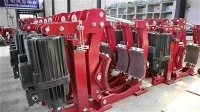
Background of the transformation
With the continuous increase in port operations, the performance requirements for cranes are also getting higher and higher. Traditional wheel-side brakes may have problems such as insufficient braking force, slow response speed and difficult maintenance, which are hard to meet the demands of modern port operations. Therefore, upgrading and transforming the electric-hydraulic wheel-end brake to enhance braking performance, increase safety and reliability, and reduce maintenance costs has become an important direction for the upgrading of port equipment.
Renovation plan
1. Selection and Design : Based on the specific model of the crane, working environment and operation requirements, select the appropriate model of the electric-hydraulic wheel-end brake. When designing, key indicators such as the braking torque, response time and heat dissipation performance of the brake should be taken into consideration to ensure that the modified brake can meet the actual requirements.
2. Structural Optimization : Optimize the internal structure of the brake, such as using new friction materials, optimizing the hydraulic transmission system, and adding self-lubricating bearings, to enhance the brake's wear resistance, reduce noise, and extend its service life.
3. "Control System Upgrade" : Upgrade the control system of the brake to achieve intelligent control. By integrating sensors, controllers and other components, the working status of the brake is monitored in real time, and the braking torque is automatically adjusted to improve braking accuracy and stability.

Installation and debugging steps
1. Preparations
Inspection of Equipment: Conduct a comprehensive inspection of the crane and the electric-hydraulic wheel-end brake to be installed to ensure that all components are intact and free from rust, cracks and other defects.
Site Cleaning : Clean the installation site to ensure there are no debris, oil stains or other factors that may affect the installation quality.
Prepare Tools : Get all the tools, measuring instruments and auxiliary materials needed for installation ready, such as wrenches, screwdrivers, hydraulic oil, etc.
2. Install the brake
Positioning and installation : According to the design drawings and installation requirements, accurately position the brake at the wheel edge of the crane. Make sure the installation base is stable and firm, and the installation holes are in the correct position.
Initial Fixation : Use a nut to initially fix the brake in the installation position, but do not tighten it to facilitate subsequent adjustments.
Connect Power Supply : Connect the power supply and hydraulic system of the brake, conduct an initial test, and observe whether the brake can operate normally.
3. Adjust the clearance and braking torque
Adjust the clearance: According to the design requirements of the brake and the actual working conditions of the crane, adjust the clearance between the brake pad and the brake wheel. Make sure the gap is uniform and avoid being too tight or too loose on one side.
Adjust the braking torque: By adjusting the hydraulic pressure or mechanical structure of the brake, the braking torque can reach the design requirements. Note that the adjustment of the braking torque should not exceed the limit value to avoid damaging the brake or affecting the braking effect.
4. Performance testing
No-load test: Under the no-load condition of the crane, multiple braking tests are conducted on the brake to observe whether the performance indicators such as braking response time and braking distance meet the requirements.
Load test: Braking tests are conducted when the crane is under load to verify the stability and reliability of the brake under load.
5. Debugging completed
Tighten bolts : After all adjustment work is completed, tighten all bolts to ensure that the brake is securely installed.
Site Cleanup : Clean up the installation site, collect and properly dispose of waste.
Document Preparation : Prepare installation and commissioning records as well as technical documents to provide a basis for subsequent maintenance and upkeep.

Precautions
1. Safety First : During the installation and commissioning process, strictly follow the safety operation procedures to ensure the safety of personnel and equipment.
2. Precise measurement : When adjusting the clearance and braking torque, use precise measurement tools and methods to ensure the accuracy of the adjustment results.
3. Trial Operation Observation : During the trial operation, carefully observe the operating status and performance of the brake, and promptly identify and solve any problems.
4. Maintenance and Care : Regularly maintain and service the brake, check the quality and level of the hydraulic oil, and replace severely worn parts in a timely manner.
In conclusion, the renovation, installation and commissioning of the electric-hydraulic wheel-end brake for port cranes is a complex and significant task. Through scientific and reasonable renovation plans and rigorous and meticulous installation and commissioning processes, the braking performance and safety reliability of cranes can be significantly enhanced, providing a strong guarantee for the efficient and safe operation of port operations.