Types of Overhead Crane Brakes
Disc Brakes: Powerful Braking Force
Disc brakes are commonly used in overhead crane systems due to their superior braking force and reliability. These brakes consist of a rotating disc mounted on the crane shaft and a fixed caliper. When the brake is engaged, the caliper clamps against the disc, creating friction and slowing the crane's movement. Disc brakes are known for their high heat dissipation capabilities, making them suitable for heavy-duty applications with frequent stopping and starting.

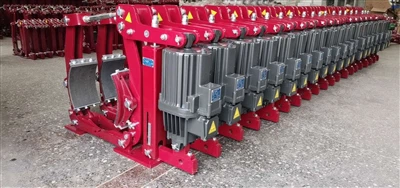
Drum Brakes: Ideal for Heavy Loads
Drum brakes are another widely used type of overhead crane brake, especially in applications involving heavy loads. These brakes utilize a set of brake shoes located inside a cylindrical drum that is attached to the crane shaft. When the brake is applied, the shoes expand and create friction with the inner surface of the drum, causing the crane to slow down or stop completely. Drum brakes are favored for their durability, ability to handle high loads, and efficient heat dissipation.

Electromechanical brakes: precise and reliable
Electromechanical brakes are becoming increasingly popular in modern overhead crane systems for their precise control and high reliability. These brakes employ electromagnets to attract a set of brake shoes to a rotating drum or disc. When energized, the brake shoes engage, creating friction and stopping the crane's motion. Electromechanical brakes provide excellent control of braking force and can be easily integrated into the crane's control system for precise and smooth operation.

Hydraulic brakes: smooth and efficient
Hydraulic brakes use hydraulic pressure to apply and release braking force. These brakes consist of a set of brake pads or shoes that are pressed against a rotating brake drum or disc by a hydraulic cylinder. The hydraulic pressure is controlled by the hydraulic system for smooth and efficient braking. Hydraulic brakes offer excellent braking force and are often used in heavy overhead crane applications.