Latest Products


Contact Us
- Henan Changyuan Lifting Industrial Park, Changyuan, Xinxiang, China
- sales@jingucranebrake.com
- +8615516609555

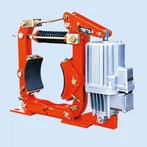
Electric Hydraulic Thrusters Brakes
YT electric hydraulic thrusters brakes is a drive control device integrating motor, centrifugal pump and oil cylinder, and has the characteristics of compact structure.
Description

YT1 electric hydraulic thrusters brakes
YT1 electric hydraulic thrusters brakes brake can be used for driving devices of drum brakes such as YWZ4 and YWZ4-A series, and can also be used for driving and controlling various industrial valves, gates, directional swing and rotation devices (vertically installed upwards) and clamping devices.
The thruster consists of a drive motor and a body (centrifugal pump), and the body consists of a cover, a cylinder, a piston, an impeller, and a rotor. When the power is on, the motor drives the impeller to rotate, generating pressure in the piston, and the oil is sucked from the upper part of the piston to the lower part of the piston, forcing the piston, the push rod, and the crossbeam to rise rapidly, and the load spring is compressed through the lever mechanism to generate mechanical movement. When the power is off, the impeller stops rotating, and the piston drops rapidly under the load spring force and its own gravity. The oil flows back into the upper part of the piston and returns to its original position through the lever mechanism.
APPLICATION
YT1 electric hydraulic thrusters brakes is a kind of drive control system, which is very compact in structure and integrates electrical motor, centrifugal pump and oil cylinder. It is extensively used as drive mechanism of various YWZB and YWZ3 series drum and disc brakes, drive control of various industrial valves, penstock. directional pendulum and steering (installed upward vertically) mechanism, and clamping devices as well.
The insulation grade of YT1 series electric hydraulic thruster is grade B, and the protection grade of shell is IP54.
OPERATING CONDITION
- Ambient temperature:-20℃~+45℃, use the DB-25 hydraulic oil, It needs to be filled with oil before use.
- Relative humidity: ≤90%
- The altitude of the site is in accordance with the GB755-2019 standard.
- Voltages: AC 3 phase 380V, 50Hz(Other voltage can be made as required)
- There is no infammable, explosive, corrosive metal and insulation damaging gas and dust in the surrounding working environment.
- Special requirements can be discussed before production.
Technical data and dimensions of yt1 electoric hydraulic thrusters Brake
| Thruster type | Rated thrust (kg) |
Rated stroke (mm) |
Motor capacity(kw) | Rated voltage(v) | Rated turrent (A) |
Action time(s) | Frequency(c/h) | Dimensions (mm) | Weight (Kg) |
||||||||||
| rise | decline | D | D1 | D2 | D3 | H | H1 | L1 | L2 | C | C1 | ||||||||
| YT1-18ZB/2 | 18 | 25 | 0.06 | 380 | 0.28 | 0.6 | 0.4 | 720 | 12 | 12 | 137 | 25 | 343 | 321 | 25 | 50 | 15 | 12 | 9 |
| YT1-25ZB/4 | 25 | 40 | 0.08 | 380 | 0.32 | 0.7 | 0.4 | 720 | 12 | 16 | 154 | 25 | 386 | 360 | 32 | 64 | 18 | 16 | 12 |
| YT1-25ZC/4 | 408 | 380 | |||||||||||||||||
| YT1-45Z/4 | 45 | 40 | 0.14 | 380 | 0.39 | 0.7 | 0.4 | 720 | 16 | 20 | 178 | 30 | 496 | 460 | 47 | 94 | 23 | 20 | 18 |
| YT1-45Z/5 | 50 | ||||||||||||||||||
| YT1-45Z/6 | 60 | ||||||||||||||||||
| YT1-90Z/6 | 90 | 60 | 0.25 | 380 | 0.62 | 0.8 | 0.5 | 720 | 20 | 25 | 210 | 40 | 600 | 555 | 60 | 120 | 30 | 25 | 28 |
| YT1-90Z/8 | 80 | ||||||||||||||||||
| YT1-125Z/10 | 125 | 100 | 0.4 | 380 | 0.98 | 0.75 | 0.6 | 720 | 25 | 25 | 254 | 50 | 745 | 695 | 40 | 90 | 30 | 25 | 52 |
| YT1-180Z/8 | 180 | 80 | 0.4 | 380 | 0.98 | 1 | 0.6 | 720 | 25 | 30 | 254 | 50 | 820 | 765 | 85 | 170 | 40 | 30 | 55 |
| YT1-180Z/10 | 100 | ||||||||||||||||||
| YT1-180Z/12 | 120 | ||||||||||||||||||
| YT1-320Z/12 | 320 | 120 | 1.5 | 380 | 3.4 | 0.9 | 0.9 | 720 | 35 | 35 | 375 | 55 | 877 | 815 | 100 | 190 | 44 | 35 | 125 |
| YT1-320Z/20 | 200 | 2.4 | 2 | 470 | 957 | 895 | 135 | ||||||||||||
| Thruster type | Brakeing spring force (kg) |
Rated stroke (mm) |
Motor capacity(kw) | Rated voltage(v) | Rated turrent (A) |
Action time(s) | Frequency(c/h) | Dimensions(mm) | Weight (kg) |
||||||||||
| rise | decline | D | D1 | H | D3 | H1 | L1 | L2 | L3 | C | C1 | ||||||||
| YT1-25/4 | 20 | 40 | 0.08 | 380 | 0.32 | 0.7 | 0.4 | 720 | 12 | 16 | 408 | 25 | 380 | 32 | 64 | 228 | 18 | 16 | 14 |
| YT1-45/6 | 40 | 60 | 0.12 | 0.39 | 0.7 | 0.4 | 16 | 20 | 496 | 30 | 460 | 47 | 94 | 266 | 23 | 20 | 21 | ||
| YT1-90/8 | 70 | 80 | 0.25 | 0.62 | 0.8 | 0.5 | 20 | 25 | 600 | 40 | 555 | 60 | 120 | 320 | 30 | 25 | 31 | ||
| YT1-125/10 | 90 | 100 | 0.4 | 0.98 | 0.75 | 0.6 | 25 | 25 | 745 | 50 | 695 | 40 | 90 | 390 | 30 | 25 | 56 | ||
| YT1-180/12 | 105 | 120 | 0.4 | 0.98 | 1 | 0.6 | 25 | 30 | 820 | 50 | 765 | 85 | 170 | 420 | 40 | 30 | 60 | ||
| YT1-320/12 | 280 | 120 | 1.1 | 380 | 2.6 | 0.9 | 0.9 | 720 | 35 | 35 | 995 | 55 | 930 | 100 | 190 | 515 | 44 | 35 | 160 |
| YT1-320/20 | 250 | 200 | 2.4 | 2 | 470 | 1100 | 1035 | 170 | |||||||||||
FAQ
The operating temperature range for the regular actuator is -20℃ to 50℃. At this temperature range, 25# hydraulic oil is used. When the temperature drops below -20℃, YH-10 aviation hydraulic oil should be used instead. If 25# hydraulic oil is used at temperatures below -20℃, a heater must be installed. Generally, before starting the actuator, the heater should be turned on in advance for preheating to ensure that the actuator can start and operate normally in low-temperature environments.
We are a manufacturer, and we have builded up our company since 2004.Our factory address is : Weizhuang industrial Park Changyuan County Xinxiang City, Henan Province, China.
When selecting hydraulic fluid, it's important to consider the following key performance indicators, as they directly impact the stable operation of the actuator:
Viscosity and Viscosity-Temperature Characteristics (VI): Viscosity is one of the most important properties of hydraulic fluid. Too low viscosity can lead to severe leakage and high power consumption; too high viscosity can result in increased friction, wear, and reduced system sensitivity. Viscosity-temperature characteristics refer to the degree to which viscosity changes with temperature. Oils with a high viscosity index (VI) maintain a more stable viscosity with temperature fluctuations, which is particularly important for hydraulic systems subject to large temperature fluctuations.
Lubricity and Anti-Wear: Hydraulic fluids must provide excellent lubrication for components such as pumps, cylinders, and valves to reduce wear. Anti-wear properties are particularly important for high-pressure systems.
Oxidation Stability: This refers to the hydraulic fluid's ability to resist oxidative deterioration. Oxidation can produce harmful substances such as gums and asphalt. The higher the operating temperature, the faster the oxidation rate. Therefore, oils with good oxidation stability are recommended for high-temperature operating conditions.
Anti-foaming and air release properties: Air in the hydraulic system can cause foaming, leading to unstable pressure, sluggish operation, and even shock and vibration. Good anti-foaming and air release properties are crucial.
Cleanliness and filterability: Moisture and mechanical impurities in the oil can cause component corrosion, block oil lines and valve orifices, and affect system operation. Maintaining good filtration and cleanliness can effectively reduce system failures.
Rust and corrosion resistance: Prevents moisture and air from corroding metal components.
🔧 Practical Steps for Selecting Hydraulic Fluid
Confirm the hydraulic pump type and operating requirements: Hydraulic pumps are the most sensitive components to viscosity. Refer to the equipment manufacturer's manual for recommended hydraulic fluid grades and viscosities.
Determine the viscosity grade:
Refer to the table above and select based on the primary operating and ambient temperatures.
Generally speaking, high-pressure, high-temperature systems use higher viscosities (such as ISO VG 68 or 100), while low-pressure, low-temperature systems use lower viscosities (such as ISO VG 32 or 46).
Vanilla pumps generally require a viscosity above 10 mm²/s, plunger pumps require greater than 8 mm²/s, and gear pumps require even higher, around 20 mm²/s.
Consider the operating environment and special requirements:
Extremely cold conditions or large temperature fluctuations outdoors: Choose L-HV or L-HS low-viscosity hydraulic fluid.
For high temperatures or open flame risk (such as near smelting equipment): Use a flame-retardant hydraulic fluid such as L-HFC water-glycol or HFDR phosphate ester.
For systems containing copper or silver components: Always use an ashless (zinc content less than 0.03%) anti-wear hydraulic fluid to avoid electrochemical reactions with silver components and corrosion.
Verify compatibility: Ensure the selected hydraulic fluid is compatible with the seals, coatings, and piping materials within the system.
🛡️ Usage and Maintenance Recommendations
Strictly manage oil quality:
Avoid mixing hydraulic oils of different brands and types to prevent additive reactions and performance degradation.
Filter the oil before refueling to ensure cleanliness.
Control oil temperature: Keep the oil temperature below 70°C. Excessively high oil temperatures will accelerate oil oxidation and deterioration. Install a cooling device if necessary.
Regular Monitoring and Oil Changes:
Regularly check the oil's color, viscosity, acidity, and cleanliness.
Practice "oil changes based on quality" and replace oil immediately if any indicators exceed the specified standards.
Prevent contamination: Keep the oil tank sealed to prevent dust and moisture from entering. Clean or replace the filter element regularly.
💎 In short, the key to selecting hydraulic oil for industrial electric hydraulic actuators lies in matching the operating conditions, paying attention to viscosity, and meeting specific requirements. The most reliable approach is to prioritize the equipment manufacturer's specified oil recommendations. When operating conditions change or a replacement is needed, combine the above principles when selecting the right oil and closely monitor system performance.
I hope this information helps you make an informed choice. If you can provide the actuator's specific operating pressure, ambient temperature, or manufacturer model, I may be able to provide more specific recommendations.
Hot Tags: electric hydraulic thrusters brakes, China, manufacturers, suppliers, factory, Flameproof Electric Hydraulic Pusher, Ed Series Electric Hydraulic Pusher, single acting hydraulic cylinder, ED Thruster, Electro Hydraulic Thruster, electro hydraulic pump
You Might Also Like