


Hey there! As an Eot Crane Brake supplier, I often get asked about the weight of these brakes. It's a crucial factor, ya know? Whether you're setting up a new crane system, doing maintenance, or planning for transportation, the weight of an Eot Crane Brake can make a big difference.
Let's start with the basics. Eot Crane Brakes, or Electric Overhead Travelling Crane Brakes, are an essential part of any crane's operation. They're responsible for safely stopping and holding loads, which means they need to be robust and reliable. But their weight can vary significantly depending on several factors.
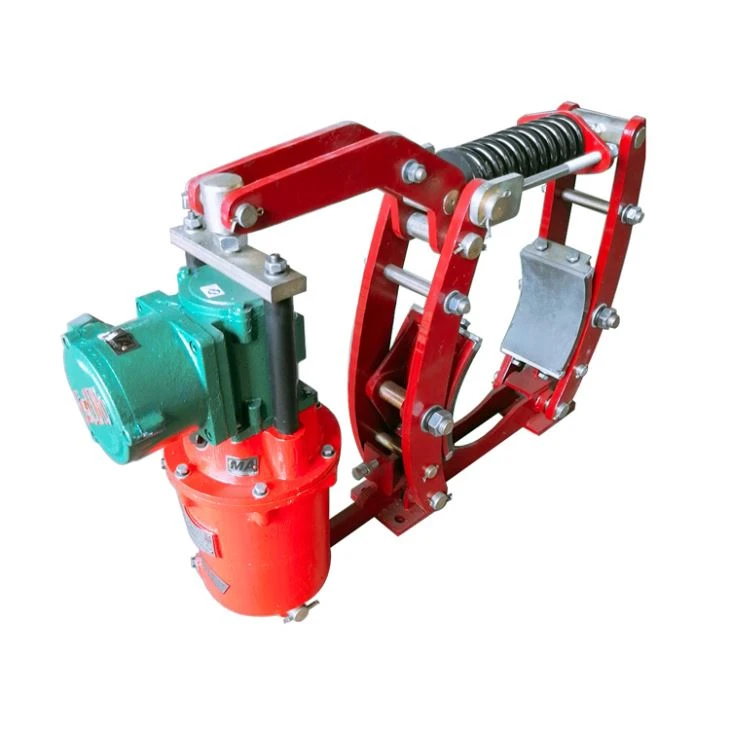
One of the main factors affecting the weight is the type of brake. There are different kinds out there, like the YWZB Electric Hydraulic Drum Brake. This type uses an electric - hydraulic system to operate. The components involved in this system, such as the hydraulic thruster, the drum, and the brake pads, all contribute to its weight. Generally, a standard - sized YWZB brake might weigh anywhere from a few dozen kilograms to over a hundred kilograms.
Then there's the Hydraulic Thruster Brake. These brakes rely on the power of hydraulic pressure to function. The hydraulic cylinder, the pipes, and the fluid inside them add a fair bit of heft. A smaller - capacity hydraulic thruster brake could weigh around 50 - 70 kg, while larger, heavy - duty ones can go up to several hundred kilograms.
Another popular option is the YT1 - 45Z/6 Overhead Crane Brake. This brake is designed specifically for overhead cranes and has a unique set of features that affect its weight. It has to be strong enough to handle the dynamic loads and movements of an overhead crane. So, it's usually on the heavier side compared to some other types. Depending on its size and configuration, an YT1 - 45Z/6 Overhead Crane Brake can weigh between 150 - 300 kg or more.
The size of the brake also plays a huge role in determining its weight. Larger brakes are designed to handle higher torque and more significant loads. They have bigger drums, stronger brake pads, and more substantial frames. For example, if you have a small - scale crane used in a workshop, you can get away with a smaller, lighter brake. But if you're dealing with a massive industrial crane that lifts heavy containers at a port, you'll need a large, heavy - duty brake.
The material used in the construction of the brake is another important factor. Most Eot Crane Brakes are made from high - strength steel. Steel is durable and can withstand the high forces involved in braking. However, it's also quite heavy. Some manufacturers might use lighter materials in certain parts of the brake to reduce weight, like aluminum for non - critical components. But these are usually in combination with steel to maintain the necessary strength and performance.
Now, why does the weight of an Eot Crane Brake matter? Well, for one, it affects the installation process. A heavier brake requires more manpower and specialized equipment to install. You need to make sure that the crane structure can support the additional weight. If the structure isn't designed to handle the weight of the brake, it can lead to structural damage over time.

Transportation is another aspect. Heavier brakes are more difficult and expensive to transport. You need to use proper packaging and handling techniques to ensure that the brake doesn't get damaged during transit. And, of course, the shipping costs will be higher due to the increased weight.
When it comes to maintenance, the weight can also pose challenges. A heavier brake can be more difficult to remove and replace during maintenance or repair work. You might need extra tools and equipment to lift and handle it safely.
If you're in the market for an Eot Crane Brake, it's important to consider the weight along with other factors like performance, durability, and cost. You want to make sure that the brake you choose is the right fit for your crane system.
At our company, we offer a wide range of Eot Crane Brakes to meet your specific needs. Whether you need a lightweight brake for a small crane or a heavy - duty one for a large industrial application, we've got you covered. Our team of experts can help you select the right brake based on your requirements and provide you with all the necessary information about its weight and other specifications.
If you're interested in learning more or looking to make a purchase, don't hesitate to reach out. We're here to answer all your questions and help you find the perfect Eot Crane Brake for your project. Let's start a conversation about how we can make your crane operation safer and more efficient.
References
- Crane Brake Handbook: A Guide to Understanding and Selecting Crane Brakes
- Engineering Studies on Crane Components - Focus on Brakes